Category: China
After the peasants’ revolt at An Lushan, Du, an official’s son was, forced to leave the capital of Chang’an, withdrawing in 759 to Chengdu in Sichuan province, where he …
Going east from Wan Chai we cross into the district of Causeway Bay, which has developed into a popular shopping and restaurant area since the opening of the road …
I suppressed, boycotted or undermined by regulations. The merchant class occupied a very lowly position in the social hierarchy and were despised for their materialism. The state refused to …
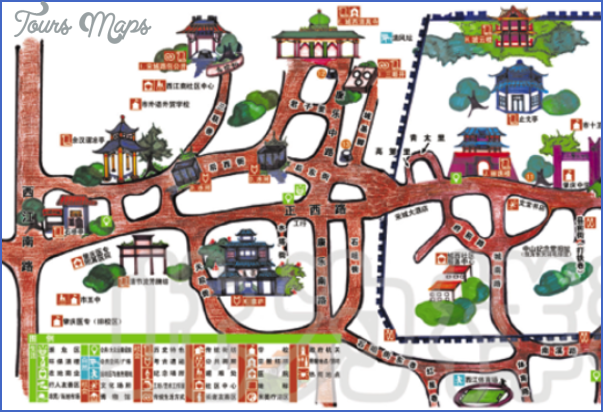
Province: Guangdong. Area: 197sq.km/76sq. miles Population: 199,000 (conurbation 5,270,000) Zhaoqing is situated on the Xijiang river, in the centre of Guangdong province, at 112°25’E and 23°05’N. From the provincial …
Lu Xun, China’s most celebrated modern writer, was said to be a lonely Lu Xun shy man and yet was inextricably linked with events in his country. He (1881-1936) …
The Chinese civilisation, which developed along the muddy, fertile banks and in the wet lowlands of the Changjiang, was chiefly an agricultural culture. Recent excavations have revealed that even …
Dai Jin (1388-1462) ranks among the most influential artists of this period and he was the founder of the Zhejiang School. His works, which betray a gift for close …
While China divides into two in a topographical sense, the same is true in hydrographical terms. From the cold, dry central highlands with irregular internal drainage in the west, …
The Provincial Museum to the south of the Spring with the Vertical Jet possesses a natural history and historical section. On display are bronzes and cut stones from the …
Language the other national minorities. These can be divided into four language families: Tibetan, Hani, Tujia and Yi languages belong to the Tibeto-Burman group, Mongolian, Kazakh and Uigur to …
source
reise fahrerkarte